
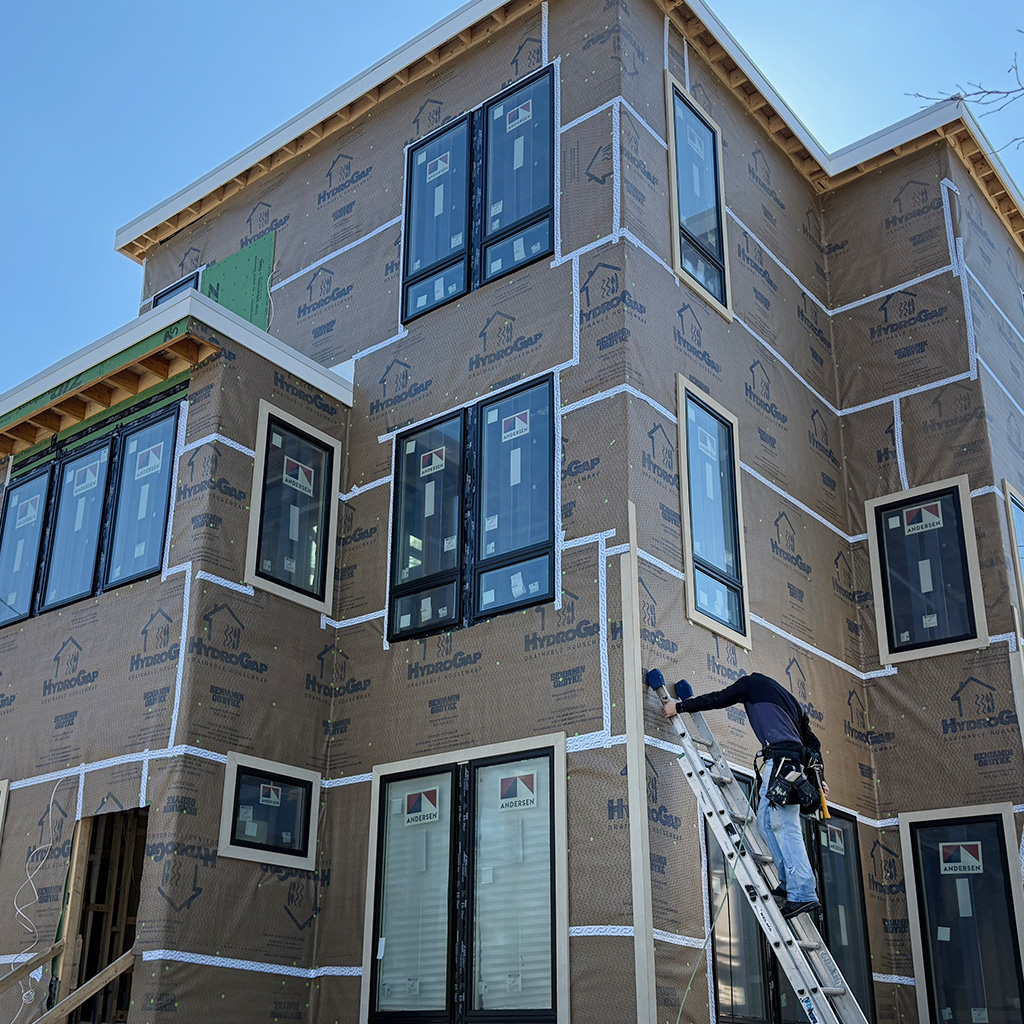
Getting developments into construction is urgent, especially for housing, so city staff expects to report back as soon as mid-June on how to streamline Cambridge’s permitting process, they told city councillors Monday.
The report will look at creating a one-stop permitting shop for developers, improving the city’s online tools and setting clearer timelines for review to give families and builders clarity around construction costs and risks, assistant city manager Melissa Peters said in a report. Giving people confidence to build is a priority for the city, with “direct implications for affordability, economic vitality and the city’s long-term fiscal health.”

Codes put in place for good reasons may no longer apply. “We really want to reassess if that goal still makes sense and weigh that against the cost on development and therefore the negative impact on development,” Peters said.
The work will be led by Jen Caira, the new deputy chief of planning at Community Development, in response to a Dec. 8 order written by Burhan Azeem – at the time a city councillor, and since elected to be vice mayor.
“Even after Planning Board approval, it can take up to two to three months to receive a permit,” Azeem said in the order, noting that a Boston Business Journal article Nov. 21 put Cambridge at the bottom of 500 cities ranked by permitting efficiency. “These inefficiencies are stymying Cambridge’s goal to enable housing production.”
Recurring request
Unmentioned when Peters gave her update Monday, in the language of Azeem’s order or at the time it was enacted was that Azeem had a similar order Feb. 26, 2024, that resulted in a comprehensive report. It was discussed at the Sept 9, 2024, council meeting.
The newer order is a precise request to “streamline the permitting process, including but not limited to creating a central role dedicated to the permitting process, the creation of a unified online permitting portal and standardized timelines.”
The 2024 order was a call for “refinement and improvement of the housing permitting process … with a focus on reducing delays, minimizing costs and enhancing clarity and accessibility for all stakeholders.”
Answers from 2024
The report back in 2024 has sections on “what has been done to streamline permitting” and on “one-stop permitting” through an online platform called Viewpoint that was adopted in 2018. It helped reduce times on alteration permits to an average 10 days in 2023 from 22 days in 2018. Average days from fee to permit that varied between 30 days to 49 days in years past (ignoring the Covid lockdown year of 2019) was down to 10.3 days in 2023. A survey of stakeholders who got building permits in Cambridge using Viewpoint showed nearly all were either satisfied, very satisfied or highly satisfied with the permitting system.
The report in 2024 was accepted by councillors with assertions there was still work to do. Reforms years earlier to make it easier to build accessory dwelling units – “in-law apartments” – resulted in “almost none built,” councillor Patty Nolan noted. A special permit was still required for the ADUs, and “requests from city staff end up either delaying it or making it way too expensive for people to to do the projects.”
Councillor Marc McGovern agreed “a lot of people are really confused about what the requirements are and what they have to do, what they can do or not do.” He cited an example of a homeowner being told by the fire department to install a sprinkler system – an additional expense of $75,000 – despite there not being a requirement for one in city code. “You can’t really say to somebody, well, this isn’t really code, but we’re not going to sign off on anything until you do it.”
Many developers complain that city departments have clashing interpretations and requirements, Azeem said.
“A great first step”
Yet the city had taken steps to address that: Monthly meetings with all staff were devoted to flag those conflicts. Every city department weighing in on development use Viewpoint, “so departments can see other people’s comments, and the developer or the contractor or the homeowner can also see all the comments and feedback,” deputy city manager Kathy Watkins said. It is “one-stop shopping.”
Every week, time is allocated on the calendars of all departments with significant involvement in special permit review. “Anybody who reaches out to us who wants to to build a project, we can slot them in,” said the assistant city manager overseeing community development at the time, Iram Farooq.
The report capturing these was taken by Azeem as “a great first step.” Despite the 2024 report and the efforts it captured, it didn’t keep Cambridge from being among the worst in the Boston Business Journal ranking, he said after the Monday meeting.
He signaled that staff should expect to go “into the weeds on some more detailed, boring stuff,” meaning what “each of these requirements means and which ones we think might be less helpful. And we might be tempted to cull some of those less helpful ones so we can save everyone a little bit of time.”
About The Author
